


A turnkey automated warehouse to support Unilever’s production expansion in Europe
Connected to the manufacturing facility, the automated warehouse will help improve efficiency at one of the multinational’s leading European plants

Unilever has bolstered its supply chain with a new turnkey automated warehouse in its Bydgoszcz (Poland) plant, a key site for beauty and personal care products. The rack-supported building, connected to production and dispatch, optimises logistics efficiency and is managed with Easy WMS.

Unilever: Global leader in consumer goods
Unilever is a leading fast-moving consumer goods (FMCG) multinational that develops and markets food, personal care and household goods. Founded in 1930, Unilever operates in more than 190 countries. With over 400 brands and a global presence, its industrial and logistics network ensures operational efficiency and continuous supply. Unilever is also committed to sustainability and social responsibility, promoting responsible production practices and projects that minimise environmental impact.
CHALLENGES
|
SOLUTIONS
|
BENEFITS
|
|---|
Consumer goods multinational Unilever has bolstered its supply chain efficiency with the construction of a new automated warehouse at its Bydgoszcz (Poland) plant. This facility is one of the group’s major European sites.
Amid continued growth, the new automated warehouse enhances the performance of logistics operations and improves the management of both production components and finished goods ready for dispatch. Thanks to automation, Unilever can plan warehouse operations much more efficiently, shortening loading times and optimising logistics resources.
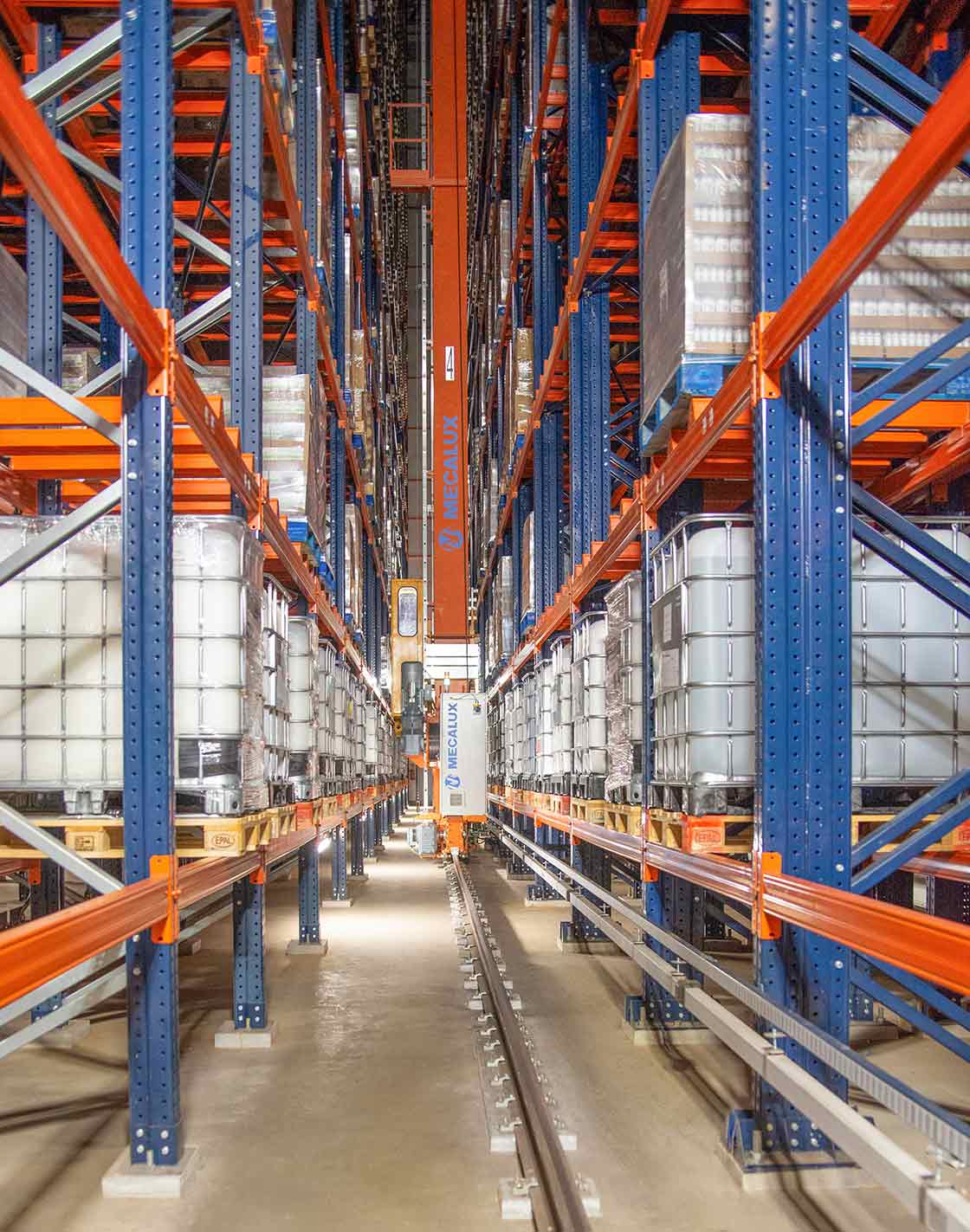
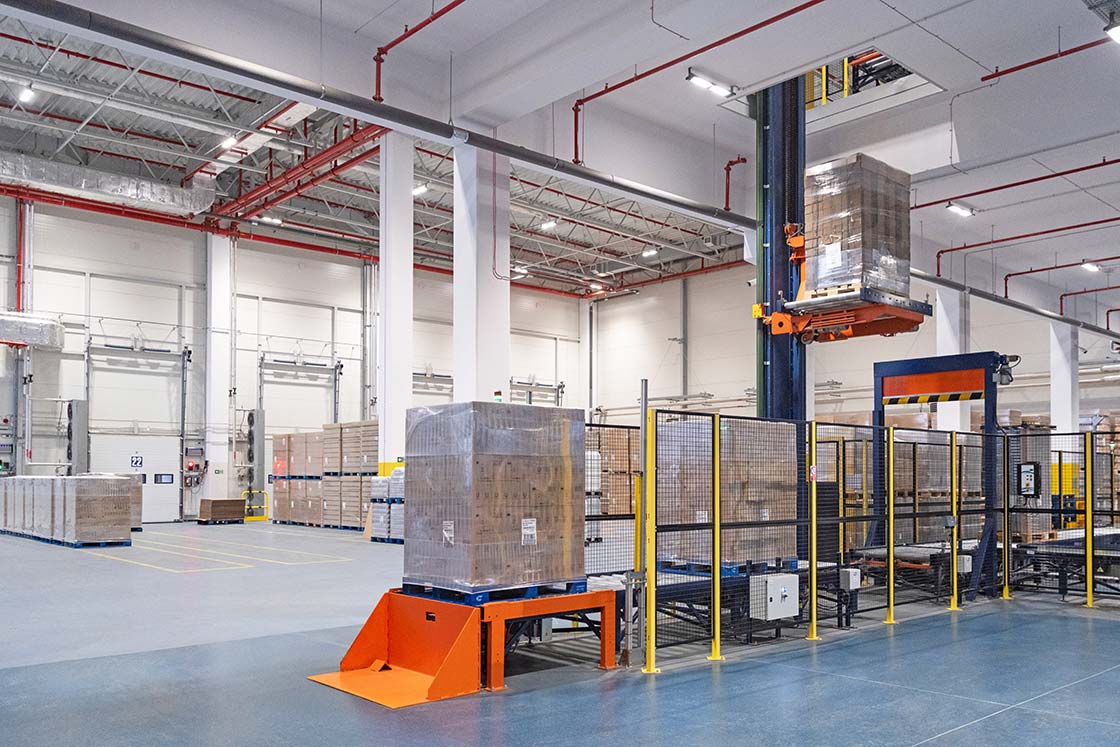
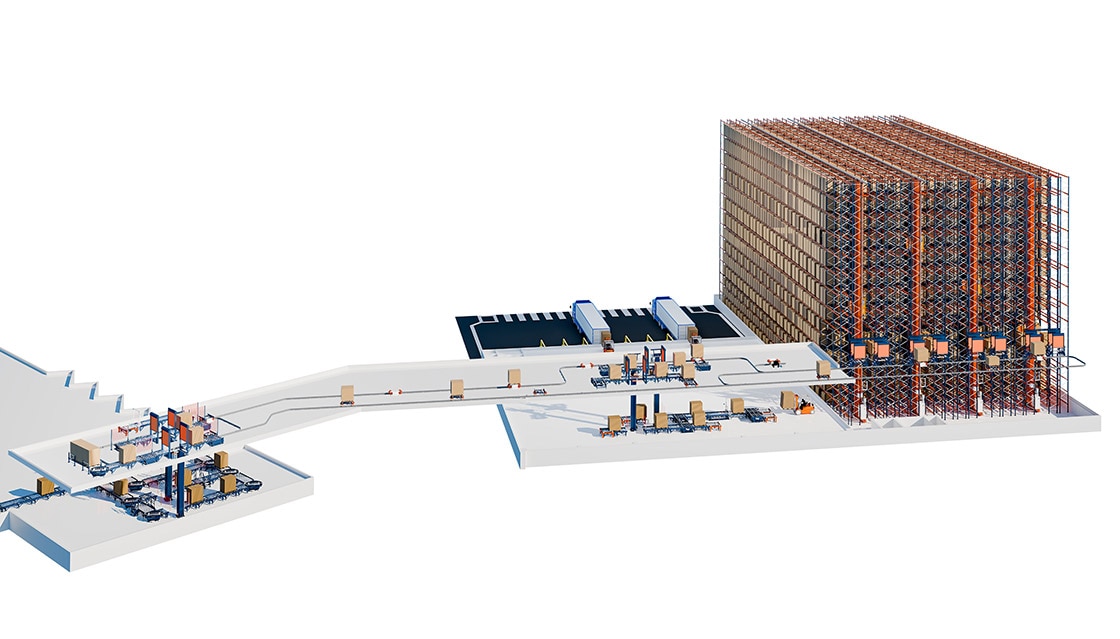
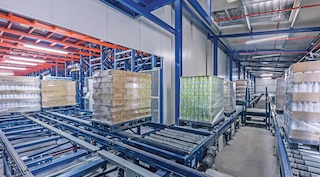
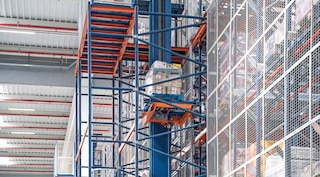
The warehouse features a rack-supported framework: 33-metre-high racking forms the building’s structure, supporting the roof and side cladding. The facility accommodates over 9,000 pallets across four aisles of double-deep racks. Four stacker cranes with telescopic forks store and retrieve pallets from their storage locations, achieving up to 130 combined cycles per hour. Mecalux’s automated solution enables a continuous flow of loads, shortens handling times and minimises operational errors.
The facility was implemented as a turnkey project. Mecalux assumed full responsibility from design through commissioning, integrating automation and software.
Direct link with production and dispatch
One of the primary strategic challenges in designing this high-capacity facility in Bydgoszcz was the direct, automatic integration of the automated warehouse with both the dispatch area and the manufacturing plant. This connection enables Unilever to respond rapidly to production requirements and speed up order distribution.
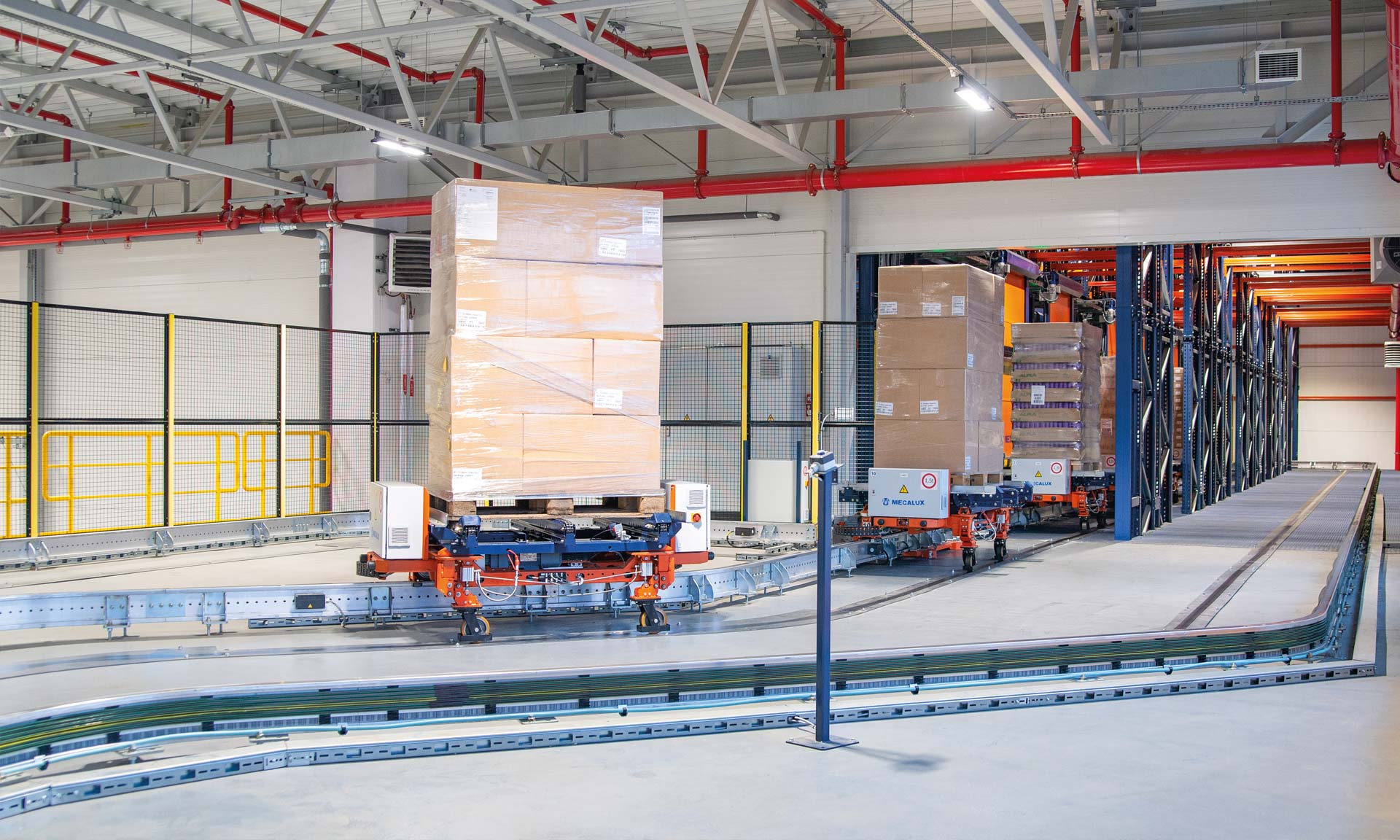
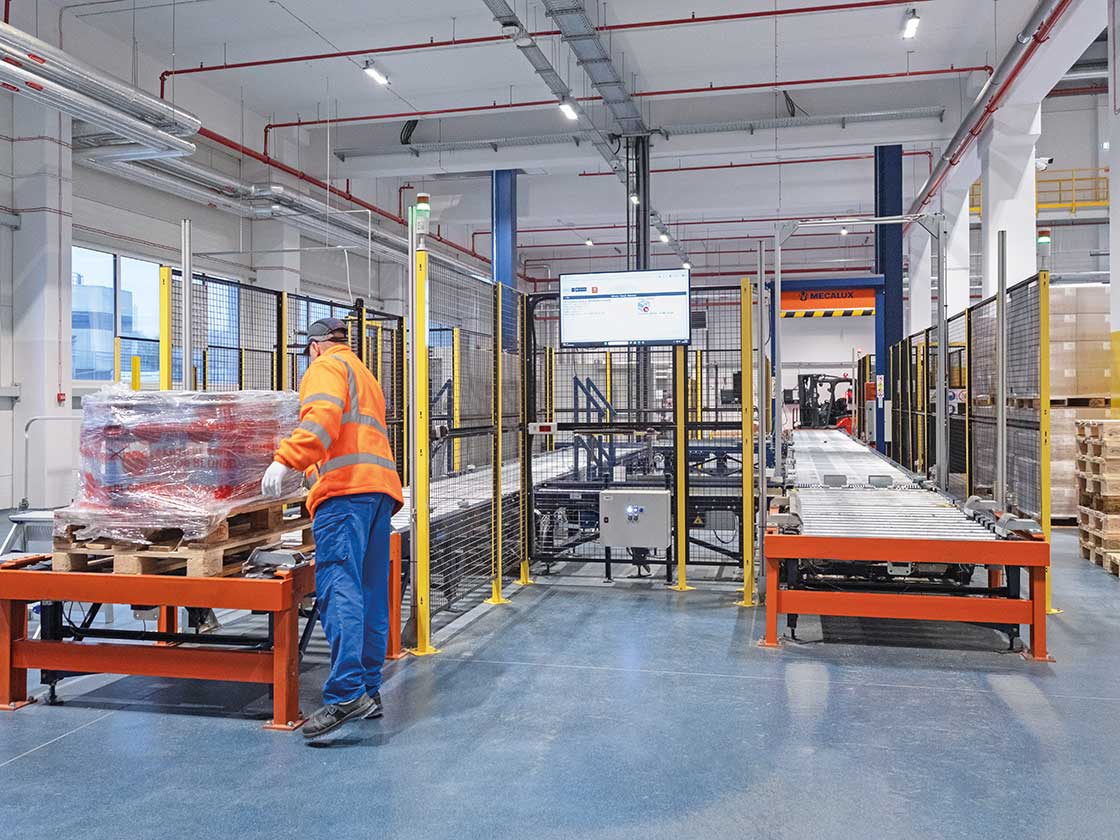
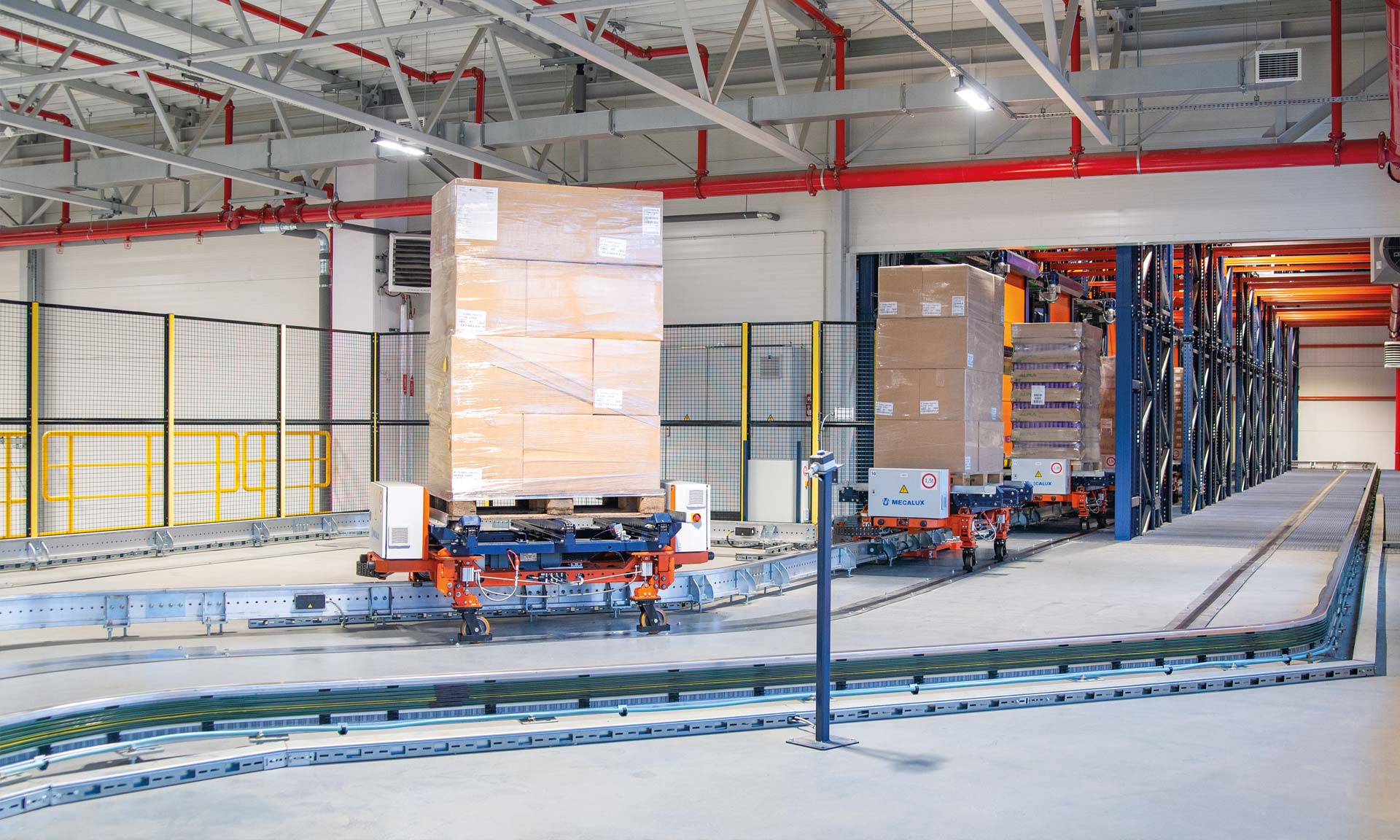
The automated warehouse and manufacturing buildings are linked via a 7.5-metre-high enclosed bridge, which allows goods to move safely from production to storage. Pallet elevators automatically lift products to the level of the bridge, overcoming height differences.
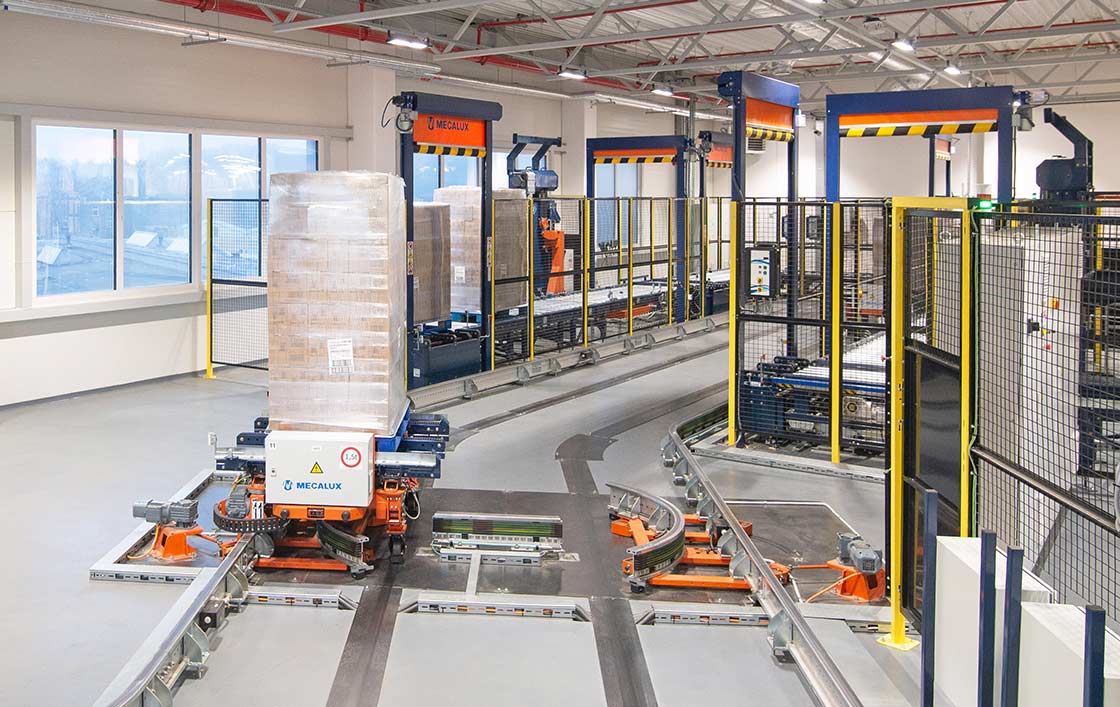
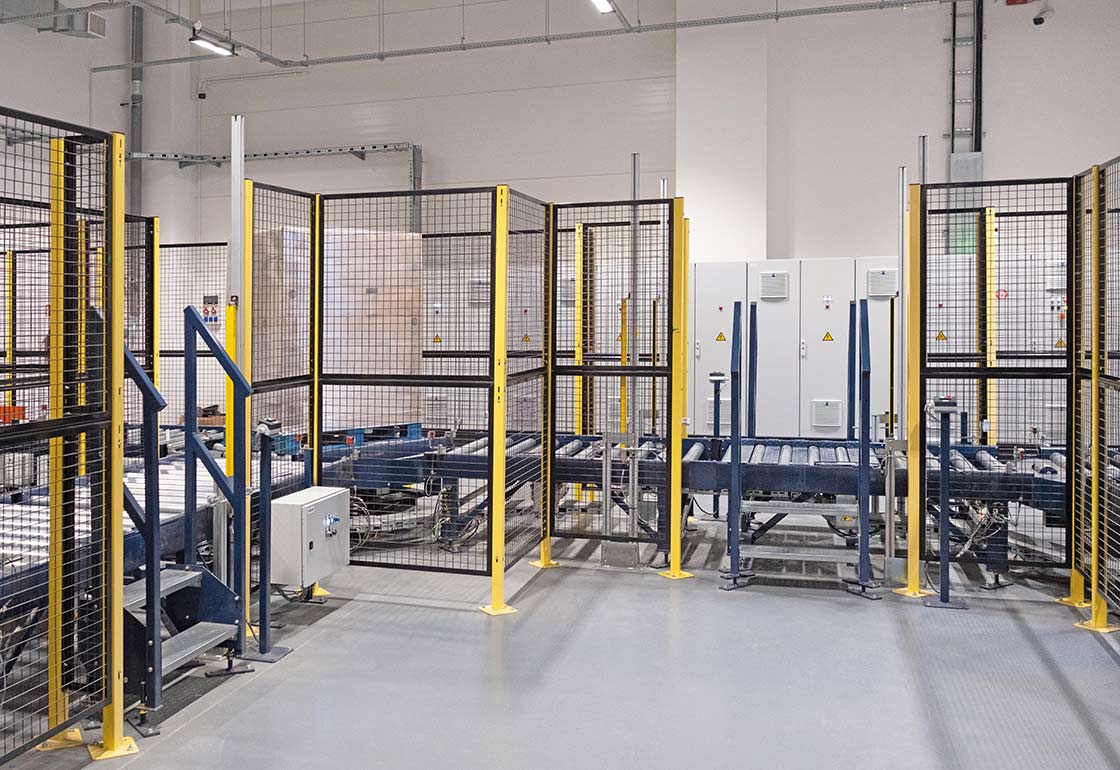
Inside the enclosed bridge, Mecalux installed a floor-mounted electric monorail system. Equipped with 15 electric trolleys, the monorail transports pallets automatically between the production, storage and dispatch areas. This setup guarantees a continuous, protected flow throughout the in-house product journey.
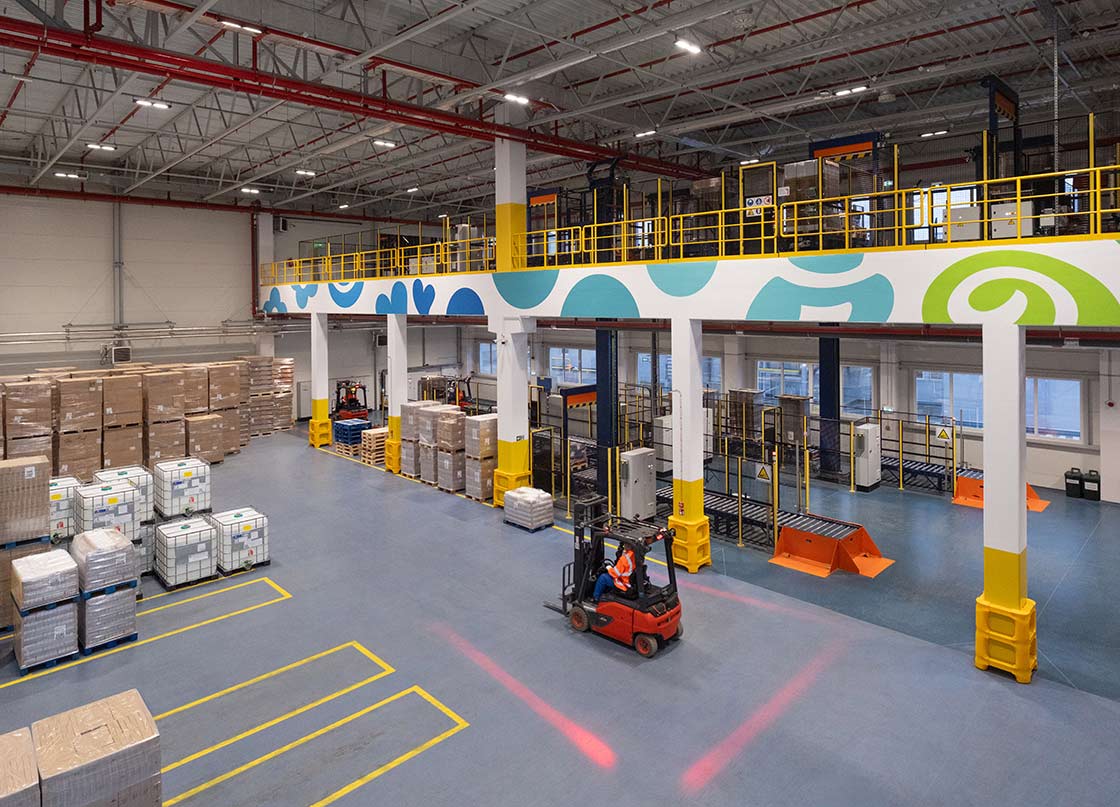
Logistics automation has also optimised dispatch processes. Unilever has slashed the loading time for a single shipment while halving its forklift fleet. This significant upgrade delivers real cost savings factory-wide while enabling more efficient resource management.
Inventory control with Easy WMS
Unilever oversees the rack-supported building using Mecalux’s warehouse management system (WMS). Easy WMS facilitates decision-making, improves delivery planning and ensures inventory accuracy at the Bydgoszcz production facility.
The system assigns locations to all 9,000 pallets based on SKU type and demand level. The Mecalux software monitors inventory status as well as the inflow and outflow of shampoos, deodorants, personal care products and household goods in a plant handling a wide range of items and high operational volumes.
For Unilever, thorough batch tracking and quality control are essential for managing FMCGs. Easy WMS provides complete traceability from production through to international dispatch, enhancing operational safety and supply reliability.
The software interfaces with Unilever’s ERP system to automatically synchronise flows between the warehouse and the manufacturing plant. This integration bolsters industrial planning and streamlines distribution logistics.
Automation and sustainability
Logistics automation is part of Unilever’s industrial strategy, which combines technology and sustainability. The production centre upgrade meets strict environmental standards aimed at optimising resource use and reducing operational impact.
With the new automated warehouse in operation, Unilever has strengthened its supply chain stability. The multinational has established its Bydgoszcz facility as an industrial export hub ready to support high production volumes and international distribution.
The warehouse’s launch builds on a long-standing collaboration between Unilever and Mecalux. The two multinationals have jointly implemented intralogistics solutions in countries such as the UK, Brazil and Uruguay.
Gallery
Unilever opens an automated warehouse by Mecalux at its Bydgoszcz plant
Products used in this project
Ask an expert