


The Global Supply Chain Institute analyses how coordinating people, policies, processes, products and partners streamlines returns management

LOGISTICS RESEARCH
By Thomas J. Goldsby and Huseyn Abdulla
A white paper by the Global Supply Chain Institute at the University of Tennessee, Knoxville, examines returns, one of the most complex processes in the supply chain. In e-commerce, nearly 17% of online purchases are sent back to the seller. The report contends that coordinating the five key areas involved in this operation — people, policies, processes, products and partners — has a positive impact on business performance.
Returns affect multiple areas of a company, including retail locations, customer service, carriers and warehouses. Because reverse logistics requires coordination across numerous processes and teams, the authors of the white paper argue that closer collaboration among all stakeholders is essential to achieving more consistent and controlled returns management.
“Returns can and should be regarded as a key strategic aspect of business. They are not wholly bad for vendors, as they afford the company an opportunity to engage further, and often more richly, with shoppers,” say Thomas J. Goldsby and Huseyn Abdulla.
Nearly 17% of online purchases result in returns — one of the most complex supply chain processes
The 5Ps of returns management
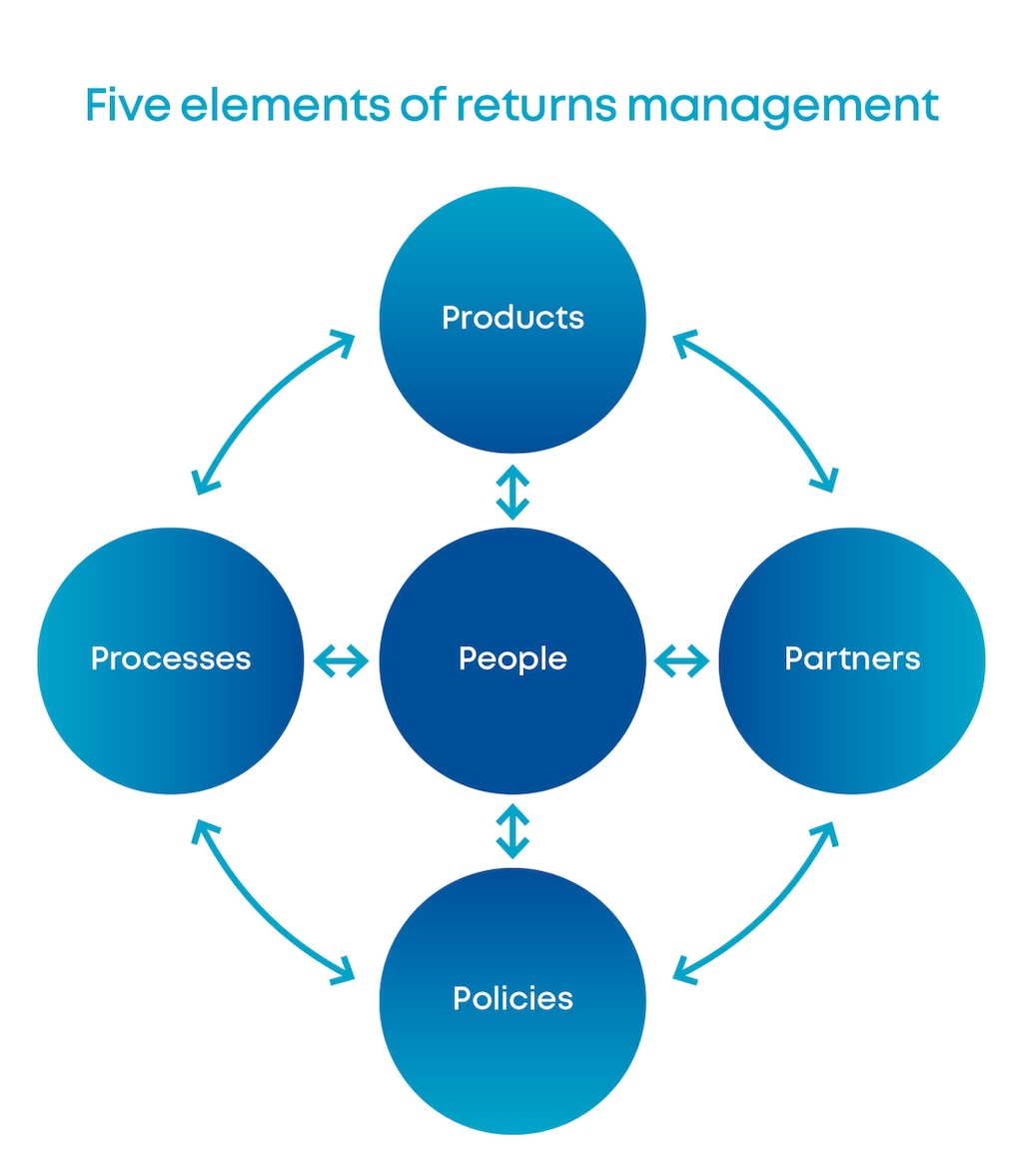
According to the professors from the University of Tennessee, Knoxville, successful returns management depends on effectively coordinating the five Ps:
- People. This includes all participants in the returns process: consumers, shop staff, customer service teams, warehouse operators and managers. Their decisions shape outcomes. For example, if a company shortens its return window, customers tend to bring products back sooner, purchase fewer items or even cancel their orders.
- Policies. Company rules influence consumer behaviour. For instance, offering more flexible return options can stimulate demand but also lead to more products being sent back. Conversely, stricter policies may reduce returns, although they can also discourage purchases.
- Processes. These encompass both returns management and the upstream operations that can result in merchandise being sent back (e.g. order picking and delivery). When these processes fail to meet expectations — whether due to delays or discrepancies between the advertised and received item — customer dissatisfaction increases.
- Products. Factors such as price, size and consumer expectations can create uncertainty: the less confident shoppers are in their purchase, the more likely they are to return it. Customised merchandise typically has lower return rates, and elements such as protective packaging and clear product information further minimise them.
- Partners. Returns management relies on a network of stakeholders. They range from companies that handle product collection to specialised providers that process and refurbish the goods or analyse the associated data. These partnerships — such as those between brick-and-mortar retailers and online merchants to provide convenient return drop-off points — benefit all parties.
Returns management is not limited to processing merchandise sent back. It also involves understanding why they happen in the first place. “The common refrain ‘the best return is the one that never happens’ illustrates that guiding consumers to the right products is vital to reducing unwanted, excess returns,” say the authors of the white paper.
Reducing returns begins with identifying their root causes
Goldsby and Abdulla maintain that returns are shaped by a set of interconnected factors rather than a single action. Taking an integrated approach to the 5Ps — one that considers both the customer experience and business needs — provides greater insight into the impact of each decision. When one of the five Ps is managed in isolation or simply overlooked, the entire system becomes less effective.

AUTHORS OF THE RESEARCH:
- Thomas J. Goldsby. Dee and Jimmy Haslam Chair of Logistics and Professor of Supply Chain Management, Haslam College of Business, University of Tennessee, Knoxville (US)
- Huseyn Abdulla. Assistant Professor of Supply Chain Management, Haslam College of Business, University of Tennessee, Knoxville (US)
Original publication:
Abdulla, H., Goldsby, T. J. The 5Ps of Returns Management: An Integrative Approach. White paper, Global Supply Chain Institute, University of Tennessee, 2025.