



Organisations that design AI-first tasks, integrate this technology into products and services and use sophisticated models foresee a 54% increase in productivity by 2030. These findings come from The enterprise in 2030, a report by the IBM Institute for Business Value, which, in collaboration with Oxford Economics, surveyed 2,000 executives about how they see their companies evolving.
Leaders’ responses reveal a reconfiguration of operating practices and strategic approaches. Two out of three respondents believe that over the next four years, AI will eliminate the resource and capability gaps currently holding their organisations back.
For nearly all survey participants, innovation will deliver the greatest competitive advantage. They also envision a 150% surge in AI investment. As a result, the executives anticipate that 62% of AI spending will be devoted to pursuing new products, services and business models by 2030. According to IBM IBV, these figures “may reflect the fact that, in a smarter enterprise, efficiency and innovation should be one and the same.”
Profits create growth opportunities
Seventy-nine percent of respondents believe “AI will significantly contribute to their revenue by 2030,” nearly double today’s 40%. Likewise, more than two-thirds expect to have tapped into some of the profits generated by AI by then. With this in mind, the consultancy recommends reinvesting productivity savings in expansion opportunities, as transforming the business model fuels future growth and creates a flywheel effect.
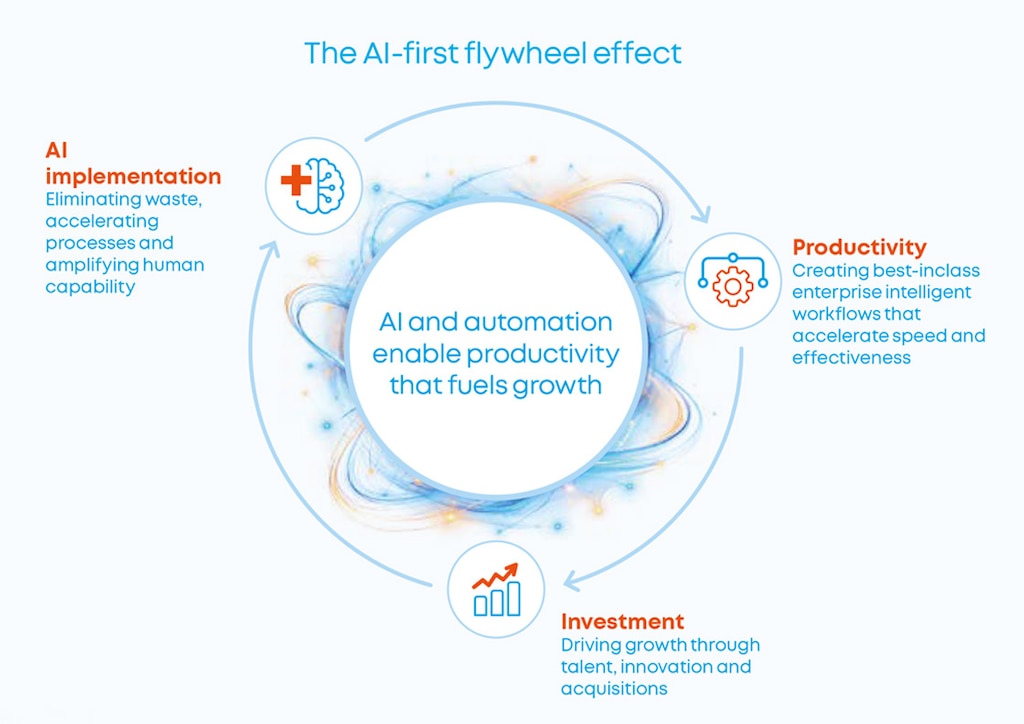
Source: IBM IBV
Reskilling the workforce
The survey highlights that organisations that prioritise AI are 48% more likely to create new roles and 46% more likely to redesign their structure. However, few companies are fully prepared to manage these changes. The executives expect that 56% of the workforce will need reskilling as AI-driven automation advances.