



Data quality: What it is, why it matters and how to measure it
Data quality is central to the success of any modern business strategy, since outcomes depend on the reliability of the information used. Guaranteeing the validity and consistency of data is a shared responsibility across departments, enabling sound decisions, efficient operations and a competitive edge.
In this post, we explain what data quality is and why it matters in a business context. We’ll also highlight the standards and criteria used to manage it, how to measure it and key best practices.
What is data quality?
Data quality refers to the extent to which a dataset meets the requirements for operational or analytical use. In practical terms, it means confirming that information is accurate, consistent and available in the right format so it can be processed without errors. Beyond a technical attribute, it represents a management discipline that ensures information is fit for purpose. Strong quality data reduces operational risks and provides the confidence needed to support business decisions.
The importance of data quality has grown with the rise of artificial intelligence (AI) and machine learning. In these environments, unreliable inputs can propagate and amplify errors in automated outcomes. As a result, organisations now focus not only on correcting mistakes but also on deploying systems capable of auditing and validating large volumes of information in real time to generate high-quality data.
Why is data quality important in a business?
Data quality is critical in business because it determines how reliable reports are and how accurate decisions can be. It also plays a key role in meeting regulatory and compliance requirements across industries. Transforming raw information into high-quality data unlocks several benefits:
- Process improvement. Access to high-quality data helps avoid operational errors and eliminates redundancies in the value chain. In logistics and industrial environments, this leads to more accurate inventory planning, shorter fulfilment times and lower costs linked to returns or supply issues.
- Better decision-making. Reliable datasets ensure that key performance indicators (KPIs) reflect real operational conditions. Management teams can rely on evidence-based insights instead of assumptions, removing uncertainty and strengthening competitiveness.
- Customer satisfaction. Collecting quality data about customers enables more personalised products and services.
- Lower operating costs. Effective data management minimises duplication and inefficiencies, helping reduce operating expenses.
The cost of poor data quality
Companies sometimes rely on poor quality data, which can disrupt plans by introducing inaccurate or biased information. According to consultancy McKinsey, 72% of leading organisations cite data management challenges as a barrier to scaling AI use cases. These data quality issues often stem from flawed data collection, system input errors or migrations carried out without correct cleansing. Poor data management can lead to several complications:
- Duplicate data. The same event is recorded multiple times, distorting metrics and increasing storage costs.
- Incomplete data. Missing fields or partial records limit visibility and usefulness.
- Inconsistent data. Conflicting values across systems create multiple versions of reality and complicate reporting.
- Inaccurate data. Errors during data capture result in biased or misleading outcomes.
- Outdated data. Obsolete information undermines forecasts and reduces reliability.
Data quality standards and criteria
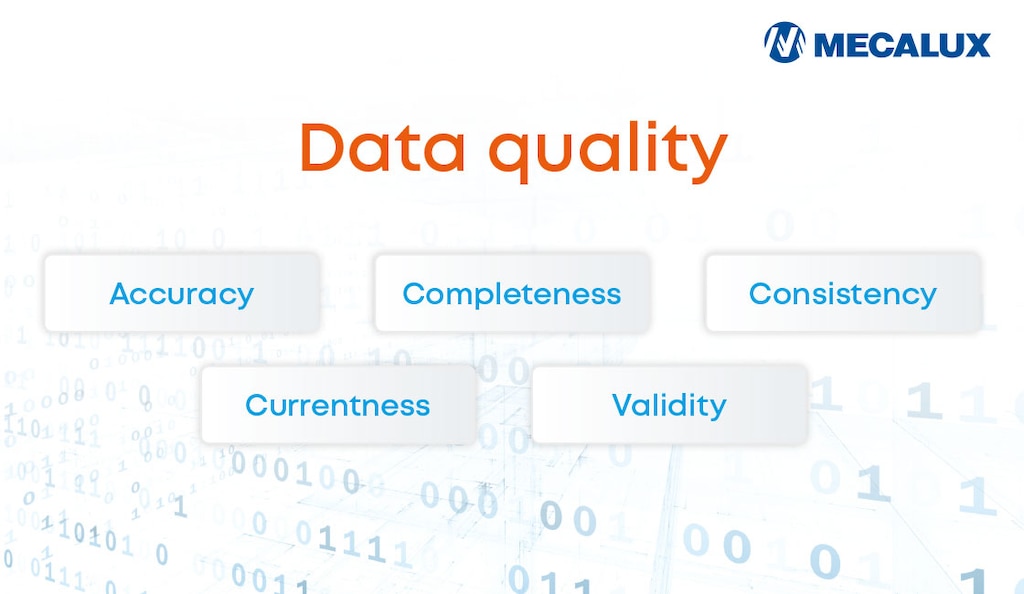
To guarantee that information becomes a reliable asset, organisations leverage recognised frameworks such as ISO/IEC 25012. This standard defines a structured model for evaluating the quality of data across multiple benchmarks. Some key data quality criteria include:
Accuracy
Data must reflect reality and capture events correctly, avoiding errors in measurement or transcription.
Completeness
Comprehensive datasets provide a complete view of operations. Missing values and gaps limit analytical effectiveness.
Consistency
Information across company systems should not conflict. This alignment helps departments operate with a shared understanding and improves coordination.
Currentness
Data must be up-to-date to remain useful. Even accurate information loses value if it becomes outdated. Forecasts and analyses should be driven by the right context.
Validity
To achieve quality data, information must comply with company business rules and technical formats, from email structures to acceptable value ranges. This avoids the need for frequent cleansing and enables applications to process data automatically.
How is data quality measured?
For data-driven initiatives to succeed, different teams must collaborate to define objective metrics. Measuring data quality is an ongoing process that typically includes these steps:
- Define KPIs and thresholds. Organisations establish KPIs for each data quality criterion, tailored to their industry. For example, a logistics provider may require an inventory location accuracy rate of over 99%.
- Perform data profiling. This is the primary measurement technique. It analyses datasets in depth, comparing them with metadata and calculating statistics. It automatically detects anomalies, null values and inconsistencies before they impact decision-making.
- Conduct audits and prepare data quality reports. Regular evaluations compare actual data against predefined standards to ensure compliance.

Data quality management best practices
Maintaining good data quality requires continuous monitoring and a company-wide commitment. These data quality management best practices help strengthen data reliability:
- Digitalise processes. Digital tools improve speed and precision. In logistics, warehouse management systems like Mecalux’s Easy WMS capture high-quality data, while its Supply Chain Analytics capability enables access to critical insights.
- Standardise formats. Consistent data formats help minimise errors and foster interoperability.
- Apply validation rules. These rules make sure that only valid inputs enter the system, acting as a first line of defence.
- Maintain traceability. Tracking data transformations throughout their lifecycle improves transparency and accountability.
Data quality: A key driver of reliability
Managing data quality is a strategic process that directly influences the reliability of business initiatives. Using international standards such as ISO/IEC 25012 transforms raw data into valuable insights. By evaluating factors such as accuracy, completeness and currentness — and leveraging advanced tools — organisations enable trustworthy decisions and efficient processes. Ultimately, fostering a culture centred on high-quality data is essential for innovation and long-term competitiveness in today’s digital environment.
Data quality in 5 questions
What is the definition of data quality?
Data quality refers to whether information meets the requirements for operational use. It ensures that datasets are accurate and consistent, enabling error-free processing, sound decision-making and avoiding risk.
Why is data quality important?
The importance of data quality lies in its ability to improve processes, support better decisions, enhance customer satisfaction and lower costs by eliminating inefficiencies.
What are the characteristics of high-quality data?
High-quality data are accurate, complete, consistent, valid and up-to-date. Based on standards like ISO/IEC 25012, these data quality characteristics support reliable decision-making, efficient operations and legal compliance.
Data profiling vs. data quality?
Data quality evaluates accuracy, validity, consistency and how well data aligns with its intended purpose. Meanwhile, data profiling is the technical process of reviewing and cleansing data to maintain those quality standards through in-depth analysis.
What is the relationship between AI, machine learning and data quality?
The relationship is cyclical. High-quality data are essential for training accurate AI models. In turn, AI and ML tools help automate error detection, enrich metadata and guarantee data privacy across datasets.