



IN-DEPTH ANALYSIS
By Jorge Calvo and Carlos Escapa
At today’s technological crossroads, where AI is redefining the rules of business competition, the concept of the AI moat has emerged as an essential strategic framework. Developed as part of Esade Executive Education’s AI in Business programme, this approach identifies six interconnected factors for building sustainable competitive advantages. More than a defensive metaphor, the AI moat represents a dynamic system that combines technical, human and ethical capabilities to address digital disruption.
1. A clear strategic purpose: A compass in the digital storm — beyond the “what” of tech to the “why”
A well-defined strategic purpose acts as a centripetal force, aligning all AI initiatives with the company’s identity. The goal is not to implement technology for its own sake, but to answer a fundamental question: How can AI amplify the organisation’s reason for being?
Pharmaceutical multinational Novartis provides a compelling example. Its AI for drug discovery initiative is not merely a technology project but the embodiment of its mission to reimagine medicine. By allocating 78% of its AI resources to accelerating treatments for rare diseases, the company has reduced average research times from 5.5 to 1.9 years, demonstrating how technology can drive strategic objectives.
A clear purpose should translate into concrete decision-making criteria:
- Use case prioritisation. The airline Emirates uses dynamic pricing algorithms not simply to maximise short-term profits but to support its vision of connecting cultures through accessible travel.
- Resource allocation. Multinational bank BBVA dedicates 40% of its AI budget to financial inclusion projects, in line with its commitment to reducing economic inequality.
This approach helps avoid disconnected technology initiatives, creating synergies between investments that mutually reinforce strategic positioning.
2. Proprietary, high-quality data: The new corporate oil
The data flywheel has become a key competitive advantage, characterised by four central attributes:
- Exclusivity: unique datasets that competitors cannot replicate.
- Contextual relevance: information directly linked to the company’s core business.
- Semantic richness: rich metadata that allows for complex interpretations.
- Continuous updating: real-time flows reflecting current dynamics.
Energy company Iberdrola illustrates this concept. Its 1.2 million sensors across electrical networks generate 5 TB of operational data daily. In addition to optimising predictive maintenance, this repository enables the business to develop unique climate simulation models, creating a significant barrier to entry in the renewable energy market.
Strategies to strengthen the data flywheel include:
- Industry digital twins. Siemens Healthineers has created virtual replicas of 130 hospitals, combining operational data with anonymised medical histories to train assisted-diagnosis algorithms.
- Learning economies. Every customer-AI interaction on Netflix improves recommendation accuracy by 0.3%, creating a cumulative effect difficult for emerging competitors to replicate.
- Regulated data partnerships. The PharmaChain consortium, which brings together 15 laboratories, shares clinical data under differential privacy protocols, greatly increasing the value of each dataset.
3. Hybrid and scalable architectures: The technological backbone
Beyond the cloud lies the paradigm of ubiquitous computing. Modern hybrid architectures integrate five technological layers:
- Edge computing for real-time processing
- Private clouds for sensitive data
- Public clouds for massive scalability
- API gateways for interoperability
- Blockchain for decentralised auditing
Department store chain El Corte Inglés implemented this architecture as part of its digital transformation. Its physical stores operate as edge nodes, processing 15,000 customer interactions per second locally, while predictive inventory models are hosted in the cloud. This hybrid approach has reduced latency by 92% and operating costs by 34%.
Designing adaptability into AI-driven transformation involves:
- Encapsulated microservices. BBVA broke down its core system into 1,200 independent microservices, enabling selective updates without downtime.
- Fractal scaling. Vehicle-for-hire startup Cabify designed each component to scale independently. Its routing algorithm handles 100 times more requests during peak hours without affecting other modules.
- Dynamic workload management. The telecommunications multinational Telefónica uses Kubernetes with predictive autoscaling, anticipating demand peaks with 87% accuracy.
These architectures are not passive infrastructure but innovation platforms that make it possible to iterate rapidly on AI models without compromising operational stability.
4. AI-augmented talent: Human-machine symbiosis
AI is redefining how people work. Rather than replacing them, it enhances their capabilities through:
- Cognitive amplification. Tools such as Microsoft Copilot increase productivity in analytical tasks by 3.4 times.
- Perceptual extension. Augmented vision systems at Siemens detect defects as small as 0.05 mm, invisible to the human eye.
- Institutional memory. Corporate chatbots such as Deloitte’s Cortex and PwC Copilot retain organisational knowledge equivalent to 50,000 years of experience.
The next frontier isn’t about technology — it’s about organisational design. Companies must create structures capable of learning at the pace of their own algorithms
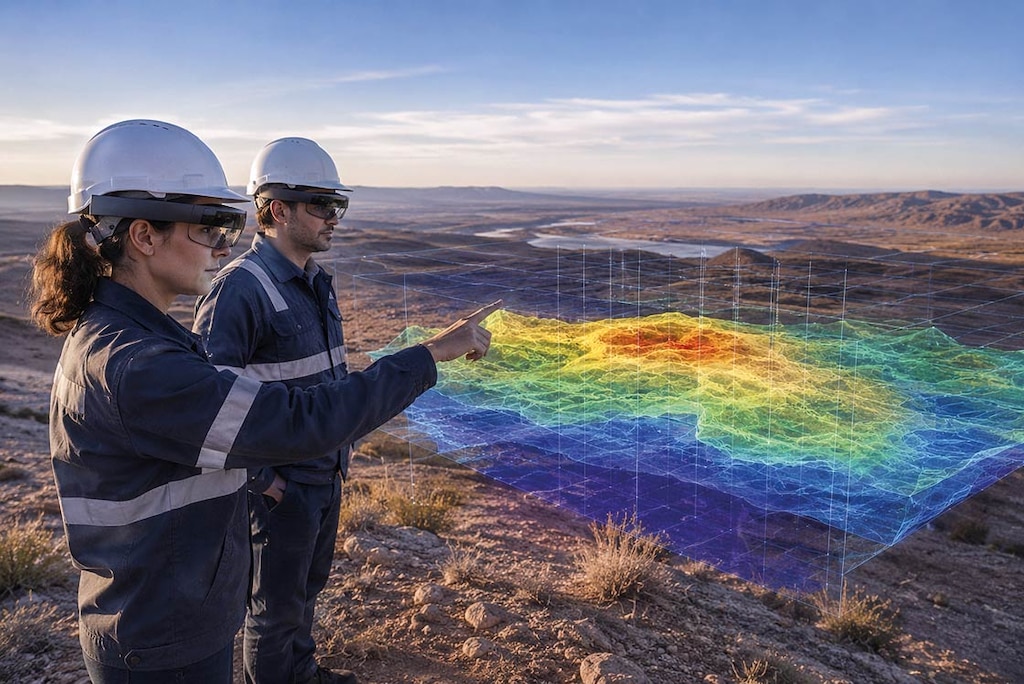
At petrochemical multinational Repsol, reservoir engineers use augmented reality glasses that overlay 3D reserve models with real-time seismic data. This symbiosis enables decisions that once required three days of analysis to be made in just eight minutes.
Innovative collaboration models include:
- Centaur teams. At law firm Cuatrecasas, human lawyers and AI systems negotiate contracts through reinforced argumentation systems, achieving agreements 40% more favourable.
- Augmented knowledge management. Pharmaceutical company Almirall uses natural language processing to map internal knowledge and automatically connect employees with colleagues who possess complementary expertise.
- Adaptive learning. Santander Bank’s training platform personalises learning paths in real time based on job performance and industry trends.
This perspective transforms AI from a tool into a cognitive ally, creating organisational advantages that go far beyond automation.
5. Adaptive organisational culture: Agility as corporate DNA
Moving from resilience to antifragility, adaptive cultures share three defining traits:
- A prototyping mindset. At clothing multinational Inditex, 30% of the IT budget is allocated to high-risk, high-impact AI experiments.
- Tolerance for intelligent failure. Google X rewards teams that fail fast, extract actionable lessons and accelerate learning cycles.
- Dynamic reconfiguration. Financial services multinational Banco Sabadell reorganises teams every 90 days using algorithms that map emerging skills.

Supermarket chain Mercadona is a prime example. Its circular innovation model integrates feedback from 4.6 million daily customers through conversational AI, allowing the company to adjust product offerings within 72 hours. This adaptability enabled Mercadona to pivot during the logistics crisis of 2024 while maintaining 95% inventory availability.
Mechanisms for systemic adaptation include:
- Cultural sensors. Telefónica monitors 147 organisational climate indicators by analysing emails and meetings, detecting resistance to change at an early stage.
- Interface teams. At gas distributor Naturgy, digital translators mediate between AI specialists and operational departments to ensure strategic alignment.
- Dynamic governance. On-demand delivery company Glovo implemented decentralised autonomous organisations to accelerate decision-making, reducing approval times from 45 days to just two.
These mechanisms turn adaptability from a slogan into a measurable and manageable capability.
6. Ethical and responsible governance: AI’s moral compass
Modern AI governance extends beyond compliance and operates on three levels:
- Strategic: ethical committees with multidisciplinary representation.
- Operational: continuous systems for monitoring impact.
- Technical: explainability and algorithmic auditing tools.
Siemens Healthineers implemented an ethical scoring system for AI projects, evaluating 23 parameters ranging from privacy to social impact. In 2024, the company rejected 12% of technically viable initiatives because of ethical concerns.
Innovative governance frameworks include:
- Smart ethical contracts. BBVA uses blockchain to encode fair-lending principles into its credit-scoring models.
- Real-time algorithmic auditing. Deep-tech Startup Sherpa.ai developed a system capable of detecting biases during the inference process and correcting them automatically.
- Layered transparency. Insurance company Mapfre provides explanations tailored to different stakeholders (from technical teams to customers) regarding its pricing systems.
The challenge ahead will be maintaining systemic cohesion amid accelerating technological change. As Esade Professor Xavier Ferràs points out, “The next frontier isn’t about technology — it’s about organisational design. Companies must create structures capable of learning at the pace of their own algorithms.” Organisations that achieve this symbiosis between human and artificial intelligence will build not only competitive advantages but entirely new paradigms of business value.
 |
Reprinted with permission from Libros de Cabecera. Adapted and edited from The AI-driven business: Leading, competing, and thriving in the age of artificial intelligence. All rights reserved. This book is available through Amazon and Libros de Cabecera in Canada, the US, the UK, Spain, France, Germany, Italy, Japan, Australia and across Latin America. |
About the authors
 |
Jorge Calvo Jorge Calvo holds a PhD in Economics and Business Administration from Abat Oliba CEU University and has completed executive education programs at Harvard Business School, MIT and Esade. He serves as Deputy Dean and Professor at GLOBIS University (Tokyo) and as Academic Director at Esade. Previously, he was President & CEO of Roland DG EMEA and Global Senior Corporate Managing Director at Roland DG Corporation, Japan. With more than forty years of international experience, Calvo is an expert in strategy and digital transformation. |
 |
Carlos Escapa Carlos Escapa is an international expert in artificial intelligence and business development, with more than three decades of leadership experience at Amazon Web Services, Meta and other global corporations. He holds a Master’s degree in Computer Science from Virginia Tech and a Bachelor’s degree from Illinois State University. Escapa combines his business expertise with teaching at institutions such as Esade, Stanford and UC Berkeley. He is a leading global expert on the strategic and ethical adoption of AI. |