



WIP inventory: What it is and how to manage it in logistics and production
WIP inventory, short for work-in-process inventory, refers to goods that have entered production but are not yet finished. This type of stock sits in the middle of the manufacturing flow and requires close oversight to prevent bottlenecks, hidden costs and efficiency losses.
In this post, we explore what WIP inventory is and the role it plays in logistics and production. We’ll also explain how to calculate it and which technologies help manage it accurately in industrial environments.
What is WIP inventory?
Work-in-process (WIP) inventory includes all materials, components and products that have begun transformation but are not yet finished or ready for sale. It represents an intermediate stage in the production cycle where resources — such as labour and materials — have already been used, while additional steps remain before completion.
This type of inventory reflects production progress and its volume is directly tied to how balanced each stage of the manufacturing workflow is. High levels may signal bottlenecks, interruptions or planning mismatches, although they can also result from deliberate strategies like make-to-stock. On the other hand, very low levels may point to supply issues or a lack of operational continuity. For this reason, WIP inventory serves as a key performance indicator (KPI) when evaluating production flow and resource utilisation.
Work in process vs. work in progress
The concepts work in process (WIP) and work in progress often appear interchangeable, but they carry subtle differences depending on context. In industrial and manufacturing settings, work in process typically refers to physical goods moving through specific stages on a production line. These are tangible items undergoing transformation until they reach their final state.
By contrast, work in progress has a broader meaning and can apply to services, projects or ongoing tasks, beyond industrial environments. Within the Kanban system, it represents the maximum number of active tasks allowed at each stage of a workflow. Setting WIP limits helps reveal bottlenecks and improves delivery predictability.
In logistics and production, both concepts fall under the WIP umbrella. However, when discussing inventory, work in process is the more precise term for physical goods in transformation.
Why WIP inventory matters in logistics
Effective control of WIP inventory directly impacts operational performance and responsiveness to demand. Correct management supports:
- Bottleneck detection. Analysing WIP inventory highlights product buildup between stages, capacity constraints and process imbalances.
- Shorter cycle times. Monitoring work-in-process inventory helps minimise wait times between operations and speeds up flow from manufacturing to shipping.
- Better use of space. Structured WIP inventory management prevents congestion in buffer zones and temporary storage areas.
- Improved production planning. Visibility into WIP allows teams to adjust priorities and workloads based on actual order status.
- Enhanced traceability. Tracking WIP inventory provides information on each item’s location and processing history.
- Lower handling and storage costs. Balanced WIP inventory levels streamline resource use while reducing unnecessary movement and idle time.
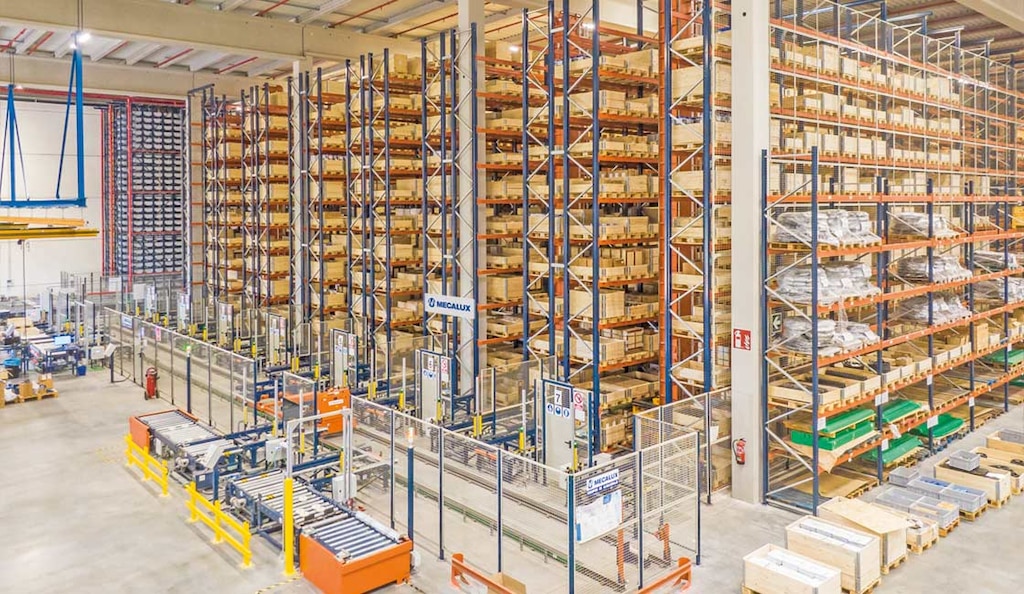
From a logistics perspective, work-in-process inventory is often concentrated in storage buffers or intermediate warehouse zones. In continuous or highly automated operations, some WIP items may not be physically stored but instead remain in transit within the production line.
WIP inventory formula
Calculating WIP inventory reveals the financial value of in-process goods and the capital tied up in unfinished products. This KPI helps assess manufacturing progress and overall production system performance.
The most common WIP inventory formula is:
Ending WIP inventory = Beginning WIP inventory + Manufacturing costs – Cost of goods manufactured
Beginning WIP inventory refers to partially completed items at the start of a period. Manufacturing costs are then added, covering raw materials, direct labour and production overhead such as energy and maintenance. Finally, the cost of goods manufactured is subtracted.
Beyond accounting, this metric is also valuable at the operational level. It helps companies analyse production flow and monitor the capital tied up at each stage of the process. A high WIP may indicate accumulation or inefficiencies, while low levels can signal supply disruptions or underutilisation of resources.
How to manage WIP inventory effectively
Managing work-in-process inventory requires coordination between production and logistics to maintain steady flow and avoid unnecessary buildup. Strong oversight improves visibility, reduces delays, maximises resource use, increases productivity and strengthens traceability of WIP inventory.
Common challenges include poor synchronisation between processes, accumulation in buffer areas, difficulty in locating WIP items and limited integration between information systems. Addressing these issues calls for clear procedures, real-time visibility and the right technology.
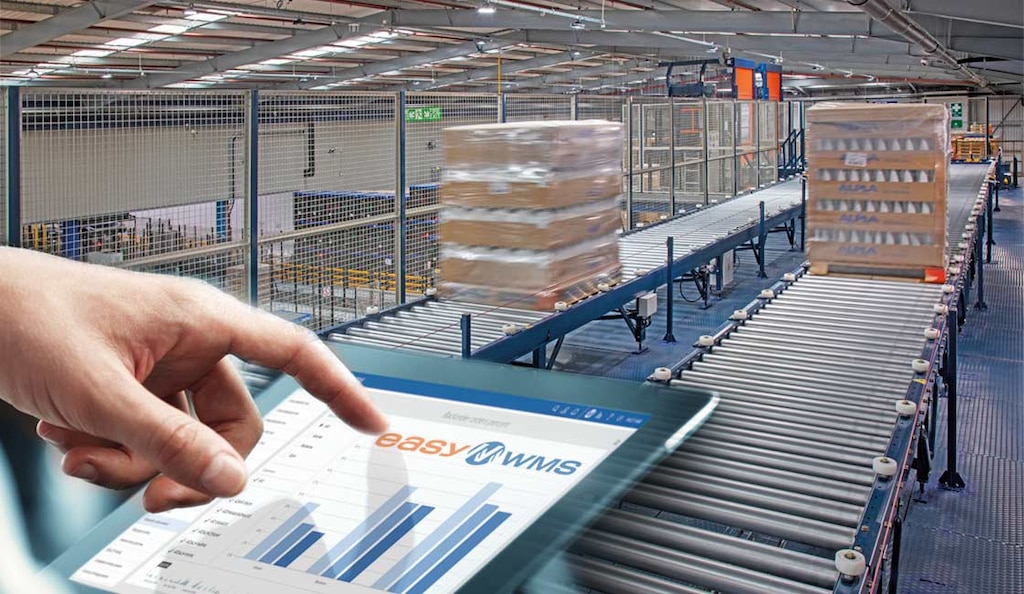
Digital solutions are essential for controlling this stock. A warehouse management system (WMS) such as Interlake Mecalux’s Easy WMS tracks WIP inventory stored in intermediate areas and buffers, logging movements and statuses with precision. Its capabilities can be expanded through the WMS for Manufacturing module, which syncs supply with production to ensure end-to-end traceability of raw materials, semi-finished products and finished goods.
Meanwhile, a manufacturing execution system (MES) monitors inventory, operations and timing within production lines and ERP systems integrate planning, cost control and financial management. When combined, these solutions provide a complete view of WIP inventory, from entry into production to final output. Achieving this requires integrated data and clearly defined processes.
A key driver of production efficiency
WIP inventory plays a central role in production efficiency, reflecting both progress on the line and overall system performance. Managing it well helps optimise resource allocation and enhance traceability across all stages of product transformation.
Maintaining balanced WIP inventory levels supports a steady flow of goods and better coordination between warehouse and production teams. In industrial and logistics environments, close monitoring is critical for achieving more predictable operations and competitive performance.
WIP inventory in 5 questions
What does WIP stand for?
WIP is short for work in process or work in progress. While both are used interchangeably, work in process is more common in logistics and manufacturing when referring to physical goods in production.
What is WIP inventory?
WIP inventory includes goods that have started production but are not yet finished. It covers materials, components and partially finished items at any intermediate stage. Monitoring WIP items helps assess efficiency and optimise material flow in production plants and warehouses.
What’s the difference between work in process vs. work in progress?
Work in progress applies broadly to tasks, projects or products underway. In Kanban, it indicates the maximum number of ongoing tasks per stage. Work in process, however, specifically refers to physical items being manufactured on the production lines.
How is WIP inventory calculated?
The WIP inventory formula adds beginning inventory and manufacturing costs (raw materials, direct labour and indirect costs) and then subtracts the cost of goods manufactured. The calculation provides the financial value of WIP inventory and insight into production efficiency.
What are the benefits of managing WIP inventory?
Correct oversight increases visibility into production status, reduces delays, improves planning and strengthens cost control. It also enhances traceability, avoids unnecessary accumulation, streamlines resources and supports a more balanced workflow.