


How to reduce delivery times in 10 steps
Reducing delivery times is one of the main challenges facing today’s supply chains. Achieving this goal requires more than accelerating transport. Companies must also optimise inventory management, order fulfilment, dispatch and the other processes that ensure goods leave the warehouse.
In this article, we’ll explore 10 steps for identifying where delays occur, addressing them and using a WMS to streamline deliveries.
1. Identify what is slowing down your deliveries
Reducing delivery times starts with pinpointing where delays originate and detecting potential bottlenecks. Delivery lead time is measured from the moment an order is received. From there, the inventory must be checked, the order picked and packed, and the shipment dispatched from the warehouse.
Once the goods leave the facility, factors such as transport, traffic, customs and last-mile delivery can extend shipping times. Distinguishing between internal and external processes makes it possible to identify which part of the total delivery time depends on the company and which is influenced by third parties, such as carriers. Understanding the source of delays will help you prioritise improvement efforts effectively.
| Component | What is measures | Where delays occur |
|---|---|---|
| Fulfilment time | From order receipt until the shipment leaves the facility |
Inventory, picking and packing |
| Transit time |
From dispatch to customer delivery |
Carrier, routes, traffic, customs and last-mile delivery |
| Delivery time = Fulfilment time + Transit time | ||
2. Optimise inventory management and stock availability
Once the source of delays has been identified, businesses must ensure that products are always on hand when an order comes in. Inventory shortages don’t just slow order fulfilment — they also affect the customer experience. According to Accenture, when consumers can’t find what they’re looking for, they often turn to competitors, which can affect a brand’s long-term sustainability. Having accurate, real-time information about inventory levels and product locations speeds up fulfilment and prevents operational disruptions.
Accurate demand forecasting and planning also help prevent stockouts by anticipating replenishment needs and maintaining the required inventory levels. As a result, warehouse operators can locate products quickly and fulfil orders without delays caused by inventory shortages or errors. This streamlines workflow and shortens delivery times.
3. Reduce order processing and picking times
Order fulfilment is one of the most critical operations for cutting delivery times because it accounts for much of the work between receiving an order and dispatching the goods. In an article published in the European Journal of Operational Research, René de Koster, Tho Le-Duc and Kees Jan Roodbergen note that picking is the most labour-intensive warehouse activity, accounting for up to 55% of operating costs.
One way to expedite this process is to minimise operator travel through slotting, which involves organising storage locations according to product turnover. Using the ABC analysis to place high-demand merchandise in the most accessible areas optimises pick paths and speeds up retrieval.
The selected picking method also affects productivity, but no single strategy is suitable for every warehouse. The best option depends on the number of SKUs and order lines, daily order volume and product characteristics. For example, methods such as batch picking, wave picking and zone picking address different operational needs.
4. Automate warehouse processes
Manual operations can limit a facility’s capacity as order volumes increase. Automation keeps products moving steadily and prevents repetitive tasks from slowing down processes.
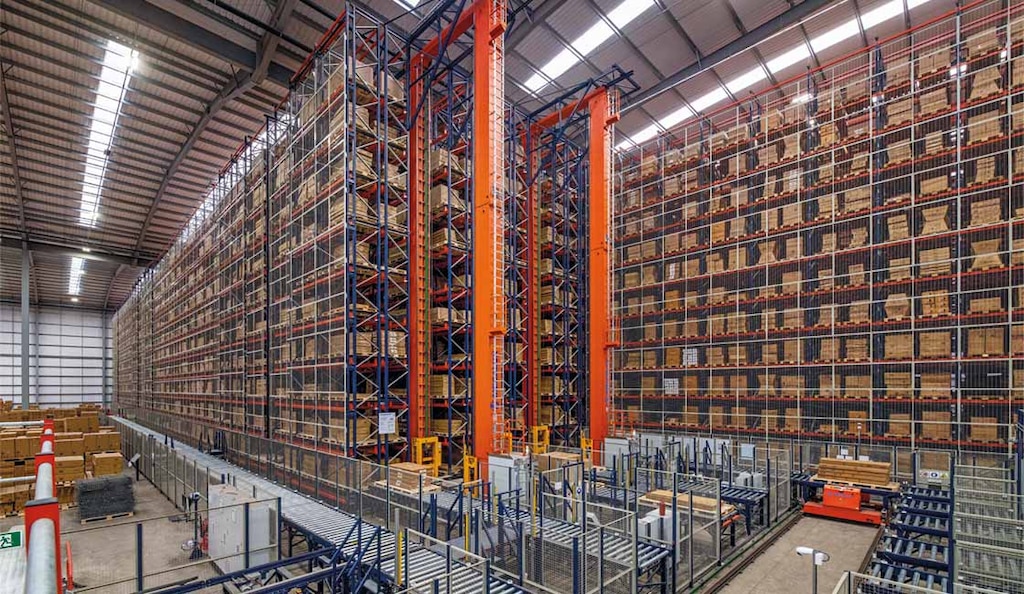
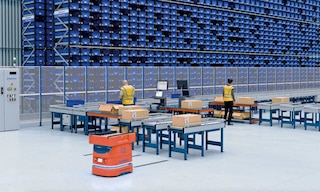
Automated storage and retrieval systems (AS/RS) speed up access to goods by minimising the time spent locating and retrieving them. Similarly, conveyors and autonomous mobile robots (AMRs) move totes and pallets between different areas of a facility automatically, eliminating unnecessary travel and waiting times. High-performance pick stations, meanwhile, bring the items required for each order to a single workstation, increasing productivity. Each of these solutions addresses a different bottleneck, either by shortening the time required to access and pick items or by avoiding travel.
5. Streamline packing, staging and dispatch
Once order fulfilment is complete, several operations still need to take place before the goods leave the warehouse. The order may still need to go through consolidation, packing, labelling, documentation, dock assignment and vehicle loading. Any of these stages can become a bottleneck if they’re not correctly optimised.
To prevent delays, it’s advisable to coordinate dispatch based on delivery routes, carriers, priorities and pickup times. This eliminates unnecessary waiting and ensures that each order leaves the facility as scheduled. Minimising the time spent on consolidation, packing and vehicle loading also extends the cut-off time for accepting orders for same-day shipment.
6. Use a WMS to accelerate order fulfilment
A warehouse management system (WMS) coordinates all logistics operations from a single platform. This synchronises inventory, fulfilment, replenishment and dispatch, ensuring each task is carried out at the right time.
Mecalux’s Easy WMS, for instance, accelerates warehouse operations in several ways:
- ERP integration. The WMS synchronises inventory between the two systems, eliminating manual data entry and supporting a seamless flow of information.
- Order prioritisation. The software automatically organises tasks based on criteria such as urgency, customer type and service level so that the most critical orders are handled first.
- Replenishment. It anticipates replenishment needs in picking locations, preventing interruptions caused by stockouts.
- Dispatch cut-off management. The WMS coordinates with carrier departure times so orders can be shipped the same day without missing the pickup window.
- Ecommerce. Orders from online sales platforms are entered into the WMS, while the Multi-Carrier Shipping Software module automates carrier selection, label generation and shipping documentation.
7. Optimise transport and carrier management
Once an order leaves the warehouse, delivery depends largely on transport planning. Choosing the right carrier, optimising routes and consolidating loads help shorten transit times and improve service levels.
Companies that work with multiple logistics providers can benefit from Easy WMS’s Multi-Carrier Shipping Software. This module automates carrier selection and documentation generation, expediting dispatch. A transport management system (TMS) also facilitates route planning and real-time shipment tracking. This visibility enables businesses to respond more quickly to incidents, reorganise deliveries when necessary and keep customers informed about their orders. In addition, carrier performance data helps companies select the most suitable option for each type of shipment.
8. Reduce last-mile delivery times
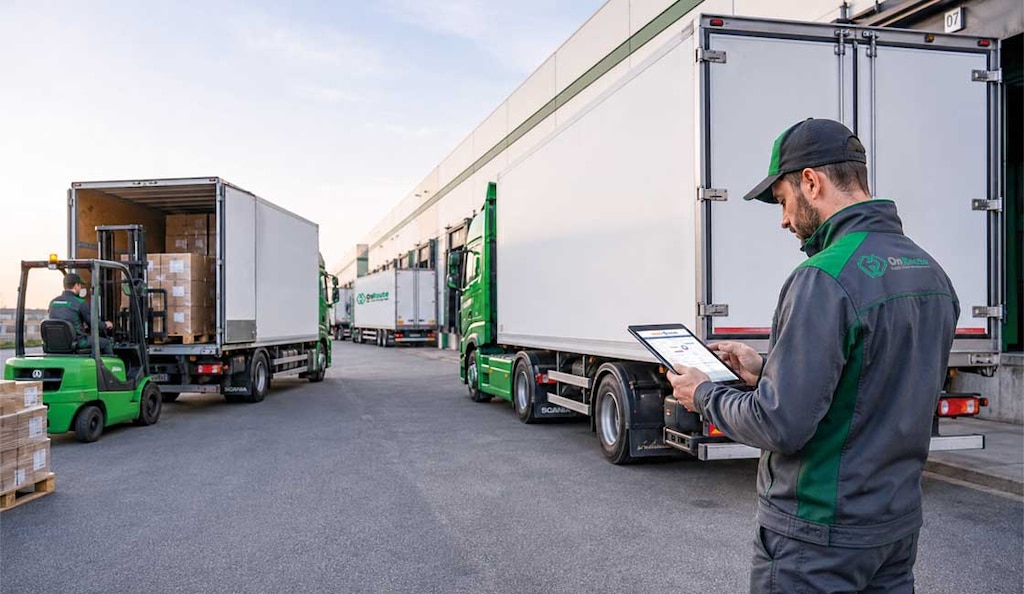
The last mile can be one of the most complex stages of the supply chain and create bottlenecks. Factors such as traffic, delivery issues and inefficient route planning can delay a shipment even when it leaves the warehouse on time.
To prevent this, businesses should optimise routes, plan deliveries based on the geographic density of each area and offer delivery windows that meet customers’ needs. Using pickup points and real-time tracking tools can also speed up the last mile.
9. Position inventory closer to customers
Moving merchandise closer to consumers cuts delivery times but makes management more complex. A network of warehouses allows organisations to ship orders from a nearby location, but it also requires coordination between sites.
For a multi-location strategy to be effective, businesses must determine which facility should fulfil each order. Mecalux’s Easy DOM (distributed order management) system automates this assignment based on criteria such as inventory availability, proximity to customers and company-defined rules. This approach shortens delivery times without adding unnecessary complexity to stock control.
10. Measure and continuously improve delivery performance
Consistently reducing delivery times requires tracking results at every stage of the process. Organisations use various key performance indicators (KPIs) to evaluate both logistics lead time or cycle time — how long it takes from order receipt to customer delivery — and each individual stage.
In the warehouse, businesses should track KPIs such as order processing time, picking time, order accuracy and dock-to-dispatch time. For transport, useful metrics include transit times and on-time dispatch and delivery rates. Analysing these indicators separately makes it easier to pinpoint where delays originate.
Finally, global metrics such as OTIF (on-time, in-full) and DIFOT (delivery in full, on time) provide an overall view of service levels. OTIF measures a supply chain’s ability to deliver complete orders within the agreed time frame. Meanwhile, DIFOT assesses compliance with these commitments from an operational and fulfilment perspective.
Faster deliveries start with a more efficient warehouse
Reducing delivery times depends on more than a single measure. It calls for optimising every stage of the logistics process, from inventory management and order fulfilment through to dispatch, transport and last-mile delivery. These improvements shorten delivery times and enhance customer service. Tools that provide visibility and facilitate coordination enable companies to respond more quickly to demand and meet increasingly high customer expectations.