


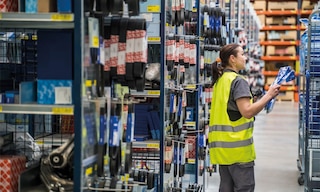
Pick and pack warehouse
A pick and pack warehouse is an order fulfilment facility where picking and packing are integrated into a single workflow. This method reduces handling, shortens processing times and boosts efficiency in environments with high product turnover and order volumes, such as ecommerce and omnichannel distribution centres.
In this post, we explain what a pick and pack warehouse is and how it’s organised. We’ll also explore the technologies that support the pick and pack process and how companies can optimise it.
What is a pick and pack warehouse?
A pick and pack warehouse is a facility designed to combine order picking and packing into a streamlined workflow. Rather than retrieving items first and moving them to a separate packing area, products are picked and placed directly into their final shipping packaging.
Pick and pack warehouses are designed to eliminate unnecessary handling steps and travel time. This operating model is commonly used in demanding environments such as ecommerce and omnichannel distribution, where speed and accuracy are critical.
What is the warehouse pick and pack process?
The warehouse pick and pack process is a continuous flow that connects all order processing phases from receiving through shipping. Key stages typically include:
- Order receipt: The warehouse management system receives the customer order and generates picking tasks based on delivery deadlines, inventory availability, picking routes and other criteria.
- Picking: Warehouse operators or automated systems retrieve the required products from storage locations.
- Verification: Items and quantities are checked to ensure order accuracy before shipment.
- Packing: Products are placed in their final shipping packaging, protected appropriately and labelled for transport.
- Shipping: The completed order is moved to the shipping area and is dispatched to the customer. This stage completes the pick, pack and ship process.
What pick and pack systems and technologies are used?
Modern pick and pack operations rely on technology to boost efficiency, streamline flow, minimise errors and adapt warehouse operations to changing demand.
WMS
A warehouse management system (WMS) coordinates the entire pick, pack and ship process, starting with order receipt. It dynamically assigns picking tasks, creates more efficient pick paths and synchronises item picking with the packaging used for shipment. In addition, it sets priorities based on service level requirements, provides order traceability and tightens control over pick and pack operations.
Picking carts and RF devices
In manual picking environments, operators use multi-order picking carts and handheld RF devices. These tools allow them to complete multiple orders simultaneously, placing products directly into their final packaging in line with the cluster picking method. Additionally, they provide instant access to current inventory and order information, boosting accuracy and shortening fulfilment time.
Voice picking
Voice picking and packing systems guide operators through tasks using spoken instructions delivered through a headset, enabling hands-free operation. Integrated with a WMS, voice technology improves ergonomics and helps workers stay focused on their tasks, resulting in higher productivity and fewer errors.
Putwalls
Putwalls are modular sorting stations with multiple compartments, each assigned to an order. Following the picking process, putwalls help operators quickly consolidate items before packing them into their shipping parcels. Putwalls are particularly useful for high-volume ecommerce pick and pack fulfilment.
Pick-to-light systems
Pick-to-light technology uses light-up displays to guide operators to the correct storage locations and indicate picking quantities. These systems increase speed and accuracy in pick and pack warehouses, especially for fast-moving products.
Conveyors
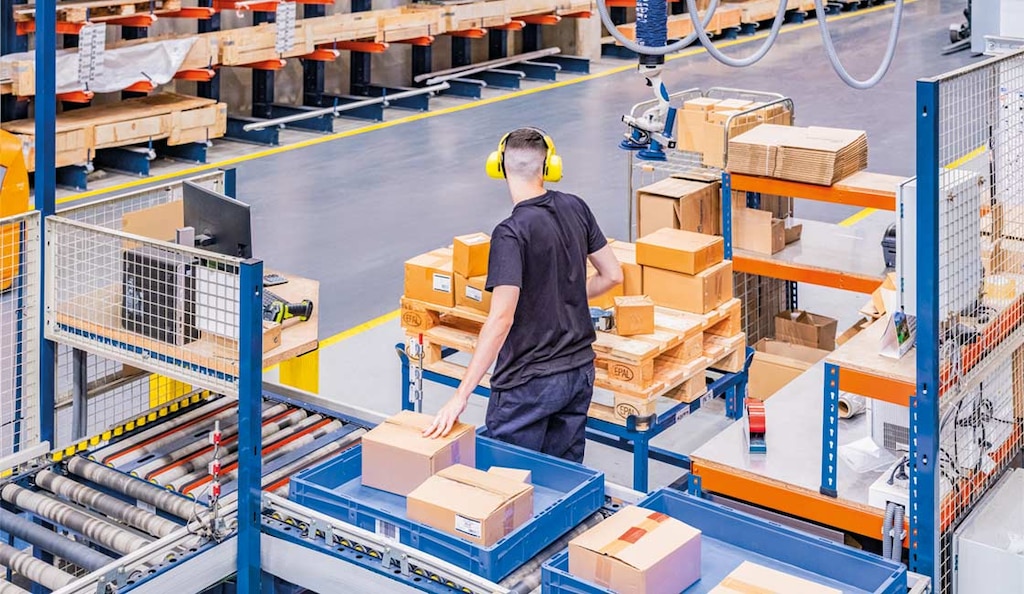
Box conveyor systems automate the flow of cartons, bins, totes and trays between different warehouse areas. In a pick and pack fulfilment centre, they transport shipping cartons from one picking station through to another, where products are added directly to their final packaging. This method connects order picking zones to the shipping area, cuts down on employee travel and supports a continuous workflow.
Shuttle and miniload systems
These automated storage and retrieval systems (AS/RSs) streamline the handling of totes, cartons, bins and trays. The Shuttle System uses electric shuttles that move autonomously within storage lanes and between levels, while a miniload system employs stacker cranes to automate loading and unloading.
These goods-to-person solutions bring products directly from storage locations through to picking stations, reducing travel time and accelerating the picking and packing process. They’re particularly effective in facilities with high order volumes and rapid inventory turnover.
High-performance pick stations
These workstations are designed to maximise efficiency in a pick and pack warehouse. Operating under a goods-to-person model, products automatically arrive at fixed pick stations, where operators fill multiple orders simultaneously without having to travel. Some systems can achieve 1,000 picks per hour, making them ideal for fast-paced fulfilment operations.
A high-performance pick station typically features two distinct tiers. Product totes arrive from storage on the upper level, while operators place items into order boxes on the lower level. The process is continuously guided by the WMS, which directs each task. The software can be enhanced with support technologies such as light-directed systems to improve accuracy in high-demand environments.
Pick and pack warehouse layout
The optimal pick and pack warehouse layout depends on factors such as order volume, product characteristics and operational strategy.
Person-to-goods layout
In this setup, operators travel through storage aisles to pick items. Orders are typically placed directly in shipping cartons that accompany the warehouse picker throughout the route. This layout is common in facilities using split case picking, batch picking and wave picking strategies.
Multi-tier picking layout
This configuration combines multi-tier shelving with elevated walkways to create multiple picking levels. By increasing storage density and enabling simultaneous operations on different levels, multi-tier layouts can raise productivity in intensive pick & pack fulfilment environments.
When integrated with conveyors, this layout facilitates the continuous movement of cartons and supports efficient order consolidation.
Goods-to-person layout
With this setup, operators remain at fixed picking stations while products are automatically delivered from storage systems. Conveyors and automated solutions organise the flow of goods to and from workstations, maximising efficiency and enabling high-volume pick and pack order fulfilment.
What does a picker packer do in a warehouse?
A picker packer is the person who retrieves items from storage locations and prepares them for shipment, ensuring that orders meet required specifications.
In a manual facility, this operator would locate products in storage, pick the correct items and quantities, verify accuracy, pack the goods for shipment and apply labels and shipping documentation for dispatch. However, as warehouse technology evolves, the role of the picker packer is changing significantly. Nowadays, workers interact with WMS software, RF devices, voice-directed picking tools and goods-to-person systems. Rather than working independently, picker packers now operate within synchronised workflows where their tasks are integrated into a single fulfilment process.
Improving pick and pack performance
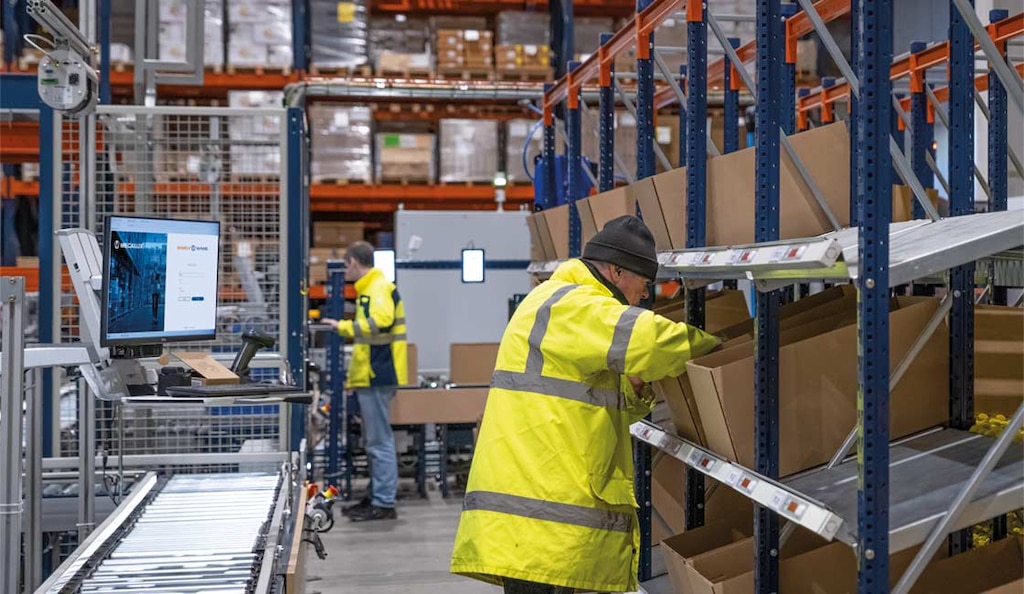
Companies seeking to optimise their pick and pack rates should select the right strategy based on the specific needs of each operation. Factors such as order volume, SKU diversity, product characteristics and service-level requirements all influence a warehouse’s ability to decrease processing times.
Choosing the most appropriate fulfilment method and combining it with the suitable technologies is key to enhancing efficiency. A well-designed pick and pack warehouse layout, together with a WMS and goods-to-person solutions, can increase reliability, productivity and overall order fulfilment capacity.
Optimising pick and pack order fulfilment
A pick and pack warehouse can be an effective solution for businesses operating in ecommerce, omnichannel distribution and other fast-paced environments. By integrating picking and packing into a single workflow, companies can reduce handling, improve order accuracy and shorten fulfilment times. Whether implemented through manual processes or advanced automation, pick and pack operations can be adapted to a wide range of business models. Combined with the right warehouse management software and storage technologies, they help create faster, more reliable and more scalable fulfilment operations.
Pick and pack warehouse, in 5 questions
What is pick and pack fulfilment?
Pick and pack fulfilment is an order processing method in which products are retrieved from storage locations and placed directly into their final shipping packaging. It integrates picking and packing into a single workflow. This approach cuts down on handling, boosts efficiency and is particularly beneficial in e-commerce and high-volume distribution operations.
What is pick, pack and ship?
Pick, pack and ship refers to the complete warehouse order fulfilment process. It includes picking products from inventory, packing them for transport and shipping them to the customer. This sequencing ensures that orders move efficiently from warehouse storage to final delivery.
How to improve pick and pack rates
Raising pick and pack efficiency calls for optimising both manual and automated processes. In manual warehouses, this means minimising errors and travel time with a WMS. Automated facilities can further streamline fulfilment by integrating conveyors and other goods-to-person technologies to limit manual handling and ensure a continuous workflow.
How to reduce pick and pack fulfilment cost
Lowering pick and pack fulfilment cost involves minimising travel, increasing accuracy and automating repetitive tasks. With the right technology and a well-organised warehouse layout, companies can optimise the use of resources dedicated to order fulfilment.
How important is a WMS in a pick and pack warehouse?
A WMS is vital in a pick and pack warehouse because it coordinates all operations and makes the workflow more efficient. It enables task assignment, minimises errors and enhances traceability. As a result, businesses achieve higher productivity, greater process control and more efficient, reliable order fulfilment.